


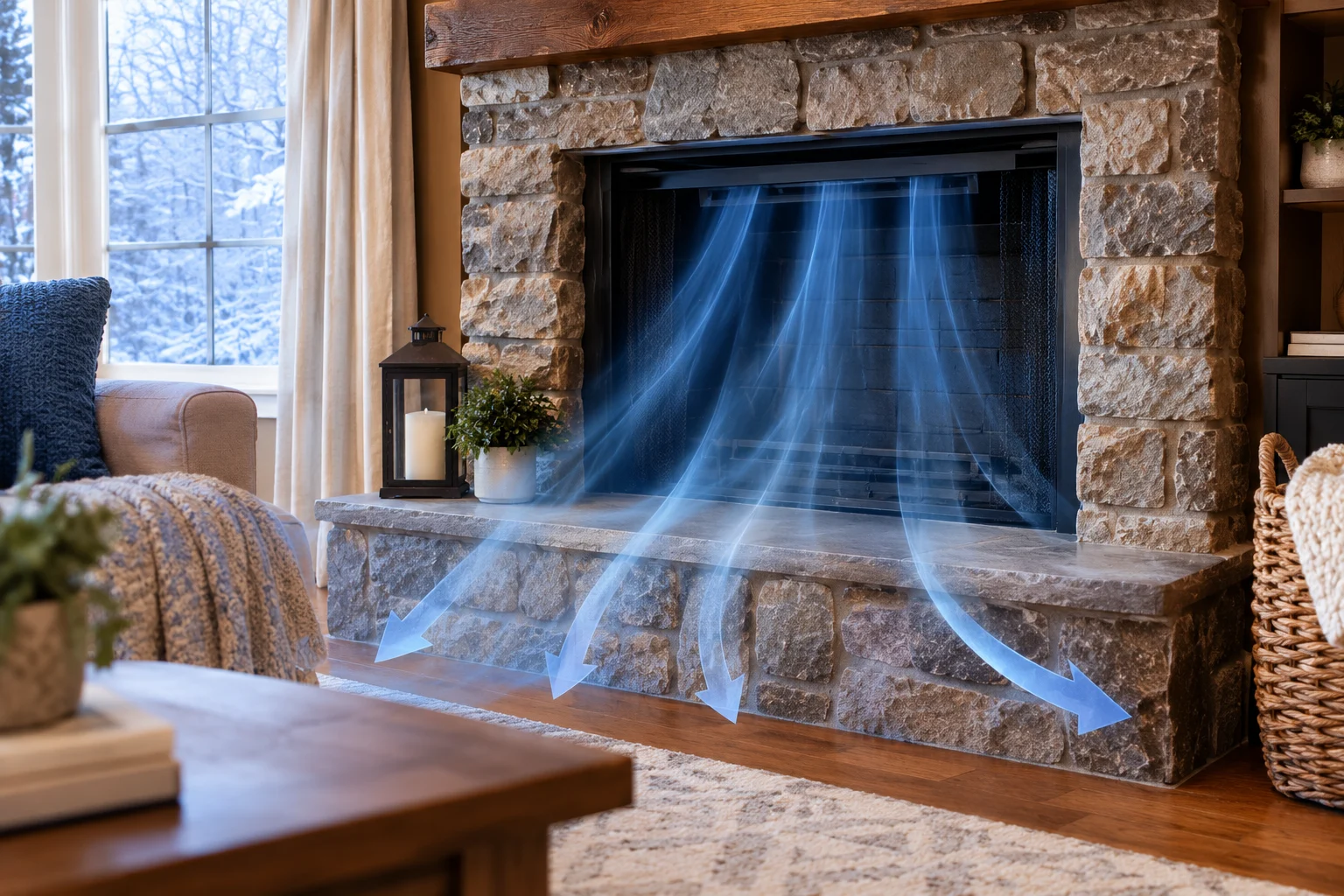
One thing that makes the Fall, Winter and Spring seasons miserable is when a cold breeze comes into the house while you are sitting on the couch trying to enjoy relaxing time. You notice your hands are cold, or your face feels cold and then you realize, a breeze is hitting you. You wonder, where is this coming from? Why is this happening? Great questions. Let’s discuss the 8 reasons why cold air comes down the chimney and into the home.
Cold air can come down a chimney because the damper is open, warped or rusted. The house has negative air pressure from exhaust fans or the chilly flue sends heavy outside air down the chimney and into your home. Another reason can be cracked or missing masonry. And finally, it seems obvious, but if you’re not looking, it can also be a missing chimney cap adding to the cold draft. We’ll take a look at what a certified chimney inspection can do to uncover the real reason the cold craft is happening.
How a Chimney Moves Air
Your chimney works like a tall straw connected to the outdoors. When a fire is burning in the fireplace, hot gases rise and pull smoke up and out through the chimney flue. When the fire is out, that same straw can work in reverse. Outside air is colder and heavier than the air inside your home. That means it sinks down the chimney flue and directly into your home.
Pressure inside the home is just as important as the temperature. Air likes to travel from areas of higher pressure toward areas of lower pressure. The chimney is one of the largest openings in most homes.
Understanding these two forces, temperature and pressure, makes it much easier for the certified chimney technician to find where your draft starts and how to stop it for good.
Common Reasons Why Cold Air Comes Down the Chimney
- A Faulty, Broken or Open Damper
The damper is like a door between your chimney and the inside of your home. There are a few reasons why the damper no longer works. Leaving it open, years of wear from high heat, or rust can cause the damper to lose its effectiveness. Meaning the seal no longer is tightly closed.
Dampers are located just above the firebox and are made from durable materials.
Rust builds along the edges of the damper. When winter arrives and the damper is closed, rust can hold the damper slightly open. The minimal opening can let the cold air making it a long cold winter.
- Negative Air Pressure in the Home
Newer homes and recently renovated older homes are built tight (the building envelope) to save energy. That efficiency is great for your heating bill, but it can create negative pressure inside your house.
Kitchen range hoods, bathroom fans, clothes dryers, and some furnaces all push air outside. The house replaces that air from wherever it can, and the chimney is often the place it comes in from.
If that did happen, what would that look like? Let’s say you are cooking a nice dinner in the kitchen. The smells are great and everyone is ready to eat…except those in the family room next to the kitchen. Those in the family room get to smell the fireplace which may smell like a bad campfire with a cool or cold breeze. Nobody in that room is hungry anymore.
On your next chimney inspection, talk to our certified technician. They look for patterns and can recommend solutions to resolve the problem.
- The Cold Flue and Its Effects
Chimneys spend all winter exposed to wind and freezing temperatures. As you can imagine, everything is as cold as the outdoors. That cold column of air in your chimney is heavier than the warm air in your home. It slides down the chimney flue and pushes it into our living space. This can be the same reason a fire is hard to start on the coldest days.
- Structural Chimney Cracks
Chicagoland winters bring the freeze and thaw cycles to our home structures, like it or not. Water gets into brick and mortar, freezes, expands, and begins to work on creating small cracks.
Cracks in the chimney crown, deteriorating mortar joints and loose chimney flashing allow outside air to make its way into the house while bypassing the chimney flue. Let’s say the damper is properly closed, but you’re still feeling a cold breeze from the fireplace. By getting your yearly inspection from Superior Chimney, you’ll soon understand that the chimney mortar has worn away leaving gaps for the air to enter.
Outside air can enter through cracks, missing or worn away mortar then moves through the space between the flue liner and the outer wall and comes out through your fireplace. Chimney tuckpointing and crown repair will close up those gaps helping to make your home warm and cozy again.
- A Missing or Damaged Chimney Cap
Strong winds can blow straight down a chimney flue that doesn’t have a chimney cap on top. A chimney cap deflects wind and works to keep rain, snow and animals out. A chimney cap works great for downdrafts. When the certified technician says that the source of cold air coming into your home is a damper or a pressure imbalance, the chimney cap can be part of the solution.
- A Dirty or Blocked Chimney Flue
A build up of creosote, leaves or a critter’s nest can block the flow of air. Air can go back into the house bringing cold air and smelly odors. A professional chimney technician can clear the chimney flue bringing fresh air back into circulation.
A Reference Guide for the Cause and Fix for Your Experience Use this table to match what you are noticing with the most likely cause and the repair that may solve it.
| Cause | What You Notice | Typical Fix |
| Open, warped, or rusted damper | Steady cold breeze at the firebox with the damper closed | Damper repair or a top sealing damper |
| Negative air pressure | Cold air and smoky odor when exhaust fans or the dryer run | Fresh air intake or makeup air system |
| Cold flue effect | Chill worst on the coldest days, smoke rolls in at startup | Top sealing damper and glass doors |
| Masonry cracks and worn mortar | Draft even with the damper sealed, damp or stained brick | Tuckpointing, crown repair, waterproofing |
| Missing or damaged chimney cap | Gusts and noise during windy weather, moisture in the firebox | New chimney cap with a hood |
| Creosote or nest blockage | Soot smell, poor draw, smoke spilling into the room | Professional chimney sweep/inspection |
- Fixing the Fireplace Draft
During a chimney inspection, the certified chimney technician will identify the cause for the fireplace draft. Here are a few solutions they may suggest:
Install a Damper
When a damper is warped or rusted, it needs to be replaced. A damper that closes at the top, or a top-mounted chimney damper is the best solution. It mounts at the top of the chimney and closes against a rubber sealant. A long chain or cable reaches down to a handle inside the chimney firebox. This makes it easy to open and close the damper.
Top mounted damper keeps out rain, debris and all size critters when the fireplace is not in use. This is a great way to protect the chimney from outside activity.
- Repair the Masonry and Chimney Crown
Chimney tuckpointing replaces missing, cracked or worn mortar so water and wind can no longer move through the structure and down into your home. A chimney crown can also form hairline or larger cracks allowing water to also enter the chimney.
One way to keep water from entering is with ChimneySaver, a water repellent solution that adds protection against the winter freeze thaw cycle. It lasts for up to 10 years, giving you peace of mind for a long time.
Now that you now know the 8 reasons why cold air comes down the chimney and into the home, let’s take a look at a few ways to ensure cold air stays out.
Dampers
Choosing the right damper can make a big difference in your home. Here’s how the two most common types compare.
| Feature | Throat Damper | Top Sealing Damper |
| Location | Just above the firebox | At the top of the chimney |
| Seal | Metal on metal | Rubber / silicone gasket |
| Keeps the flue warm | Flue stays exposed to outdoor air | Flue stays closer to room temperature |
| Blocks rain and animals | Only at the bottom of the flue | Yes, at the top of the chimney |
| Best for | Fireplaces in good condition with a well-fitting plate | Drafty fireplaces and homes seeking better efficiency |
Why Does a Certified Chimney Inspection Matter?
A cold draft may be annoying to you and your family, but it is giving you clues that your chimney is not working properly. A 14-point chimney inspection confirms that your chimney vents safely and efficiently. The Chimney Safety Institute of America recommends an annual inspection for every chimney that is woodburning, gas or sitting idle. You can learn more about CSIA certification on their website.
During an inspection, Superior Chimney uses various tools including photos to view any problematic parts of the flue. We look for creosote buildup, cracked liners, damaged dampers, animal nests and cracks in the masonry that affect the proper flow of air.
You then receive photo evidence and a 14-point inspection report, also sent to you via email, so you can decide on the repair (if needed) that’s best for you.
Chimney Care to Put on Your Calendar
| Season | Recommended Task |
| All Seasons | Schedule your annual inspection and sweep |
| Early fall | Check the damper, cap, and glass doors before the first fire |
| Winter | Watch for drafts, smoke odors or moisture around the hearth |
| Spring | Look for freeze and thaw damage on the chimney crown and mortar |
Contact Superior Chimney today to schedule your chimney inspection.
Frequently Asked Questions About Cold Air and Chimneys
Is it normal to feel some cold air near the fireplace?
A fireplace is naturally less insulated than a solid wall. It may be slightly cooler as you reach the fireplace. However, a noticeable breeze usually means the damper is no longer sealing properly or an air pressure imbalance is occurring. A chimney inspection can confirm what is happening.
Can a dirty chimney cause a draft?
Yes. Built up creosote or debris can interrupt the upward flow of air, causing it to come back down the flue along with odors. A professional chimney sweep can bring the healthy airflow back.
Will a chimney cap stop cold air from coming into my home?
A chimney cap is excellent at deflecting wind and keeping rain and animals out.
What is the best way to stop cold air from coming down a chimney that doesn’t get used?
A top sealing damper is one of the most effective options because it seals the flue at the top with a gasket.
How often should a chimney be inspected?
Plan on an inspection once a year. Our long, cold winters and frequent freeze and thaw cycles make annual checkups a way to keep your home safe.
Remember the 8 reasons why cold air comes down the chimney and into your home. Contact us today! Call 877-244-6349