


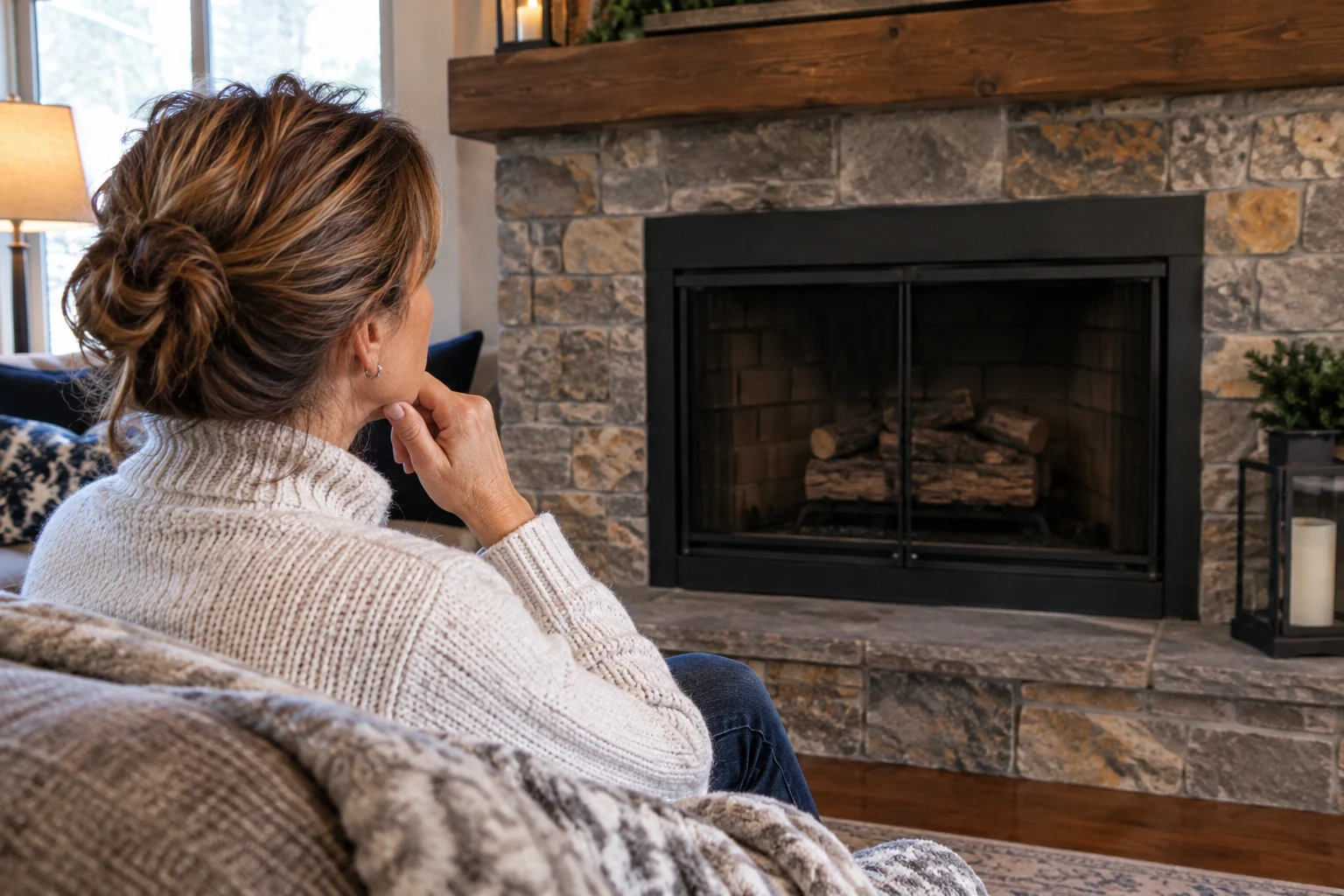
The nights are getting chilly and grabbing a blanket is great, but when you get up, you’re cold again. Let’s warm up the room with a roaring fire. Now that will keep you nice and warm. But is it “safe” to use the fireplace?
To begin, we must say that there is no such thing as a safe fireplace. Putting a fire in in your home is inherently not safe, period! It is best to use the fireplace only after a certified chimney sweep technician cleans and inspects it first, especially if it hasn’t been cleaned in the past year. So, before you light the first fire, check for five warning signs: heavy soot or creosote, a sticky damper, crumbling masonry, a missing chimney cap, and smoke or odors entering the room. Let’s discuss each one.
Why the Cold Season is the Best Time to Check for Chimney Safety
Heating equipment is one of the leading causes of home fires in the United States. According to the National Fire Protection Association (NFPA), December, January, and February account for nearly half of all home heating fires, with January at the top of the list.
NFPA research found that creosote is the leading contributing factor to chimney and fireplace fires. That’s why thay state that if you don’t clean the heating equipment, especially chimneys lined with creosote, the chances of a fire increase. But did you know that if you get a yearly cleaning and inspection by a certified chimney sweep that this will be addressed each year?
Home heating fire facts from NFPA, annual averages for 2014 through 2018
| Measure | Annual Average |
| Home heating fires per year | About 48,530 |
| Civilian deaths per year | About 500 |
| Civilian injuries per year | About 1,350 |
| Direct property damage per year | About $1.1 billion |
| Occurring December through February | 48 percent |
| Involving fireplaces or chimneys | About 3 in 10 |
Now that you see these numbers, it makes sense why you should think of a chimney inspection as part of your home’s maintenance.
5 Warning Signs to Check Before You Start the Fire in the Fireplace
We’re going to share with you what you can do to check. But remember, a certified chimney technician is trained and certified to ensure the safety and security of your home.
Here we go. Grab a flashlight and set aside about 15 minutes. Open the damper, look up the flue as far as you can, and then step outside to view the chimney from the yard.
Here is what to look for:
1. Black, brownish or Shiny Creosote
Creosote is a natural byproduct of burning wood. When the smoke cools by rising up the chimney, it condenses on the inner walls of the chimney flue.
The Chimney Safety Institute of America (CSIA) recommends sweeping masonry fireplaces at 1/8 inch of soot buildup, and sooner if the creosote has a glossy appearance. CSIA states that fire safety experts view this level of buildup is as the point where cleaning becomes essential.
If you can do this yourself, use the tip of the fireplace poker along the smoke shelf or the flue wall. If it measures 1/8 inch or more, schedule a chimney cleaning and inspection before the first fire of the season.
2. A Sticky or Open Space in the Damper
The damper is the metal plate that opens and closes your fireplace. The chimney damper needs to open all the way when you burn a fire. It also needs to seal shut without any gaps when the fireplace has no fire.
Here’s what the check. Move the handle a few times. Does it open and shut without issue? Things like rust, warping or a handle that slips are some of the signs that the damper needs to be repair or even replaced.
If the damper is stuck and only is partially open, it can push the smoke and carbon monoxide back into the home. What’s needed is a tightly sealed opening so it keeps warm air inside. You’ll notice a bit of a difference in your heating bill.
3. The Outside Chimney
Step outside and look at the chimney from the ground. If it’s quite high, then you may need to use binoculars. Here, you are checking the chimney crown, mortar joints, and the face of the brick.
You know how our winters in the Chicagoland area can wreak havoc on our homes. The chimney’s masonry is no different. Water from rain and snow makes their wait into small cracks, freezes, expands, and widens the opening a little more with each cold snap.
Look for gaps in the mortar, bricks that flake away, white staining called efflorescence, and a chimney crown with cracks. Any of these signs mean water is getting into the chimney masonry.
Masonry repair is best done before the ground freezes. Tuckpointing, crown repair, and a breathable water repellent such as Chimney Saver, can protect the chimney for up to 10 years.
4. A Missing or Loose Chimney Cap
A chimney cap is a critical part of the chimney outside. It is the metal cover with a mesh screen that sits on top of the chimney flue. Its job is to keep rain, snow, leaves, and animals out of your chimney.
From the yard, confirm the chimney cap is in place and sitting straight. If you see an empty chimney flue opening or a cap leaning after a windstorm, its best to schedule for a chimney technician to come to your home and install a replacement chimney cap before you light the fireplace.
Every chimney needs a cap for the same reasons every home needs a roof!
5. Smoke, Odors and Cold Drafts
If you’ve had the experience of smelling a foul odor like a campfire smell coming out of your fireplace, that’s the smell of creosote in the chimney.
If you feel a cool or cold breeze coming from the fireplace, there’s a good chance its coming from the damper.
If you didn’t address either one of these, the problems are still there today. A chimney technician can identify the problem and provide the right repairs.
Warning Signs
| Warning Sign | What You May Notice | What It Means | Recommended Fix |
| Soot or creosote | Black flaky deposits or shiny glaze in the flue | Buildup has reached or exceeded the CSIA cleaning threshold | Professional chimney sweep |
| Damper issues | Handle sticks, daylight around the plate, drafts | Poor seal or blocked exhaust path | Damper repair or a new damper at the top of the chimney |
| Masonry damage | Cracked crown, open mortar joints, flaking brick | Water is entering the structure | Tuckpointing, crown repair, and waterproofing |
| Missing cap | Bare flue, nesting, sounds, debris in the firebox | Animals, rain, and debris can enter | New stainless steel chimney cap |
| Smoke or odors | Smoke spillage, campfire smell, cold air | Draft issue or deposits in the flue | Sweep, smoke guard, liner, or chimney fan |
A Chimney Inspection
The flashlight check is a great idea, but it covers only what you can see. Most of the flue liner, the smoke chamber, and the connections inside the walls stay hidden from you. That’s where a professional from Superior Chimney comes in.
NFPA 211, the national standard for chimneys and fireplaces, states that chimneys, fireplaces, and vents shall be inspected at least once a year for soundness, freedom from deposits and correct clearances. CSIA supports the same annual schedule for wood and gas fireplaces, and air/water heating appliance flues.
CSIA defines three levels of inspection. The right level depends on how you use your chimney and whether anything has changed.
| Inspection Level | When It Applies | What Is Included |
| Level 1 | Annual check for a chimney in regular use with no changes to the system | Readily accessible parts of the chimney exterior, interior, and connected appliance |
| Level 2 | Home sale, new appliance, change in fuel type, or after a chimney fire, severe storm, or earthquake | Everything in Level 1 plus a view of the flue interior and access to attics, crawl spaces, and roof areas |
| Level 3 | When a hidden hazard is suspected and a Level 2 inspection cannot confirm it | Removal of certain building or chimney components to reach concealed areas |
Superior Chimney will discuss any issues found during the clean and inspection. We provide a complimentary 14-point written inspection with photos that we’ll sent to your email. While we’re at your home, we’ll explain any repairs, if needed, discuss why it’s necessary with the pictures, and you’ll be able to make an educated decision if next steps are needed.
The Chicago Weather that Affects Your Chimney
Let’s take a look at a few conditions that weather has on the home. Let’s ensure that when you’re ready, it is safe to use the fireplace.
Freeze / Thaw Cycle
There is no doubt that we will experience a 30-degree difference from one day to the next. In Winter, these temperature changes have an effect on the exterior of the chimney. Each freeze / thaw cycle drives moisture deeper into brick and mortar and small cracks begin to grow quickly.
A crown sealant such as Crown Coat and a breathable water repellent such as Chimney Saver on the bricks keep moisture out while letting the masonry dry naturally.
Older Homes with Clay Liners
Many Chicagoland bungalows, two flats, and older colonials were built with clay tile flue liners. Over decades, these tiles can crack or separate at the joints.
A stainless steel chimney liner restores a sealed, properly sized flue and is a common and needed solution for homes built before 1960.
Furnace and Water Heater Flues
Many homes vent the furnace and water heater through the same masonry chimney stack as the fireplace (separate flue). Blocked exhaust can push carbon monoxide back into the home.
Test your carbon monoxide detectors frequently, and be sure to keep the batteries fresh.
Frequently Asked Questions
How soon can I plan to use my fireplace after a clean and inspection?
If the chimney inspection shows a clean, sound chimney, you can light a fire right away. If repairs are needed, your chimney technician will explain what is needed and tell you if it is worthy of use now, or better to wait until the repairs are made.
Do gas fireplaces need an annual inspection?
Yes. Gas fireplaces burn cleaner than woodburning. However, gas fireplaces do produce moisture and combustion byproducts. CSIA recommends annual inspections for all chimneys, including those gas furnaces and gas fireplaces using the chimney. This means that if you never use your fireplace, you’ll still need a yearly cleaning and inspection. Regardless of burning gas, wood or a “Pile of t-shirts”… there is still real fire, flames and heat that need to be contained within the fireworthy designated areas of the fireplace so that nearby home construction materials don’t catch fire!
What is the best time of year to schedule a chimney sweep?
Anytime is great for a chimney cleaning and inspection. If you plan on using it for the cool and cold weather, be sure to get it done prior to the first use.
Schedule Your Inspection Today!
Superior Chimney serves all six Chicagoland counties with CSIA certified technicians, with a “Service, Not Sales” approach. Call 877.244.6349 to schedule today!